
A July thunderstorm can tell you more about a yard than a week of dry weather. Water traces every low spot, compacted strip, and poor outlet. If the same puddles return after each storm, French drain installation may be part of the answer, but the right fix starts by reading the whole property, not by digging a random trench.
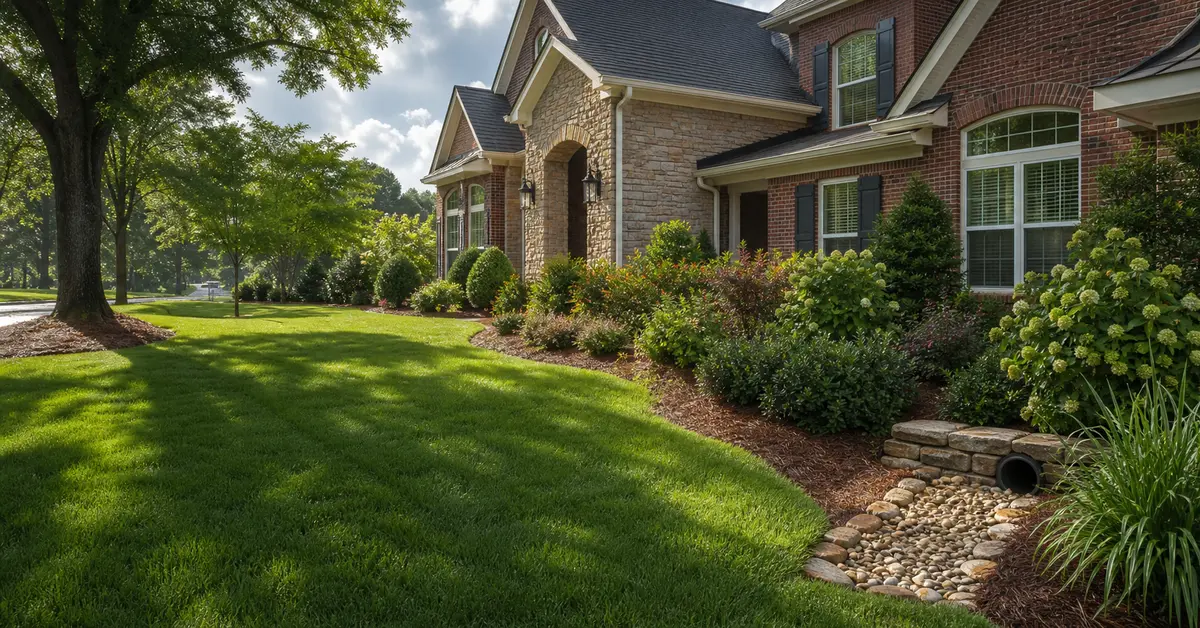
Across Phenix City, Columbus, Midland, Ellerslie, and Cataula, summer weather can swing from hard-baked ground to a fast downpour in one afternoon. That contrast exposes weak drainage quickly. A shallow depression fills, runoff cuts across a bed, and soil that looked firm yesterday turns soft underfoot. Some problems need only a modest grading correction. Others call for a properly planned French drain that intercepts subsurface water and carries it to a safe outlet.
The important distinction is recurrence. One temporary puddle after an unusually heavy storm is not automatically a failed yard. Water that returns in the same place, lingers well after nearby ground has dried, or causes visible damage deserves a closer look. Greenz Outdoor Services combines landscape drainage and grading with the surrounding landscape plan so the solution works with the property instead of looking bolted on.
Seven warning signs your yard needs a drainage plan
Walk the property once while it is raining safely and again several hours after the storm. Photos taken from the same locations can help you separate a one-time event from a consistent flow pattern. Watch for these seven signals.
1. The same puddle returns after ordinary rain
A low area that repeatedly holds water is the clearest warning sign. The cause may be settlement, compacted soil, a blocked surface route, or runoff arriving from a higher section of the property. A French drain can help when water is moving through saturated soil, but surface grading may be the more direct answer when the yard simply has no positive path away from the low spot.
2. Mulch, pine straw, or soil keeps washing out
Repeated washout shows that water has enough speed to carry material downhill. Replacing mulch after every storm treats the evidence, not the cause. The drainage plan should slow, redirect, or safely collect that flow before the bed edge erodes again. This is especially important around new plantings, where exposed roots and shifting soil can undo an otherwise sound installation.
3. The lawn stays spongy long after nearby areas dry
Soft ground can mean water is trapped below the surface even when no puddle is visible. That condition makes the lawn difficult to use and can leave ruts under routine foot traffic. Compare the area with the rest of the yard, note how long it remains soft, and look for an uphill source. A correctly placed French drain is designed to intercept that subsurface movement rather than collect water only at the lowest visible point.
4. Runoff is moving toward the house or hardscape
Water should not be encouraged toward a foundation, patio, retaining wall, or driveway. Dark splash marks, sediment lines, and water collecting beside a slab are useful clues. The answer may involve reshaping grade, protecting the transition between lawn and hardscape, or routing water around the improvement. If a patio or wall is part of the larger project, coordinate drainage before finalizing hardscape placement.
5. New gullies or bare channels appear after storms
A narrow channel is the yard showing you where water already wants to travel. Filling it with loose soil rarely lasts because the next storm follows the same fall line. A durable correction considers slope, soil stability, the volume arriving from above, and where the water can exit without creating a new problem. Larger grade changes may overlap with professional excavation and lot preparation.
6. Plants are struggling in one consistently wet zone
Different plants tolerate different moisture levels, but a bed that stays saturated can stress roots and create an uneven landscape. Before replacing plants, check whether runoff is entering from a roof discharge, driveway edge, neighboring rise, or compacted lawn. The best fix may combine drainage correction with a smarter planting layout instead of repeatedly swapping material in the same wet pocket.
7. Past drainage patches keep failing
Short pipe sections, gravel-filled ditches, and isolated drains often fail when they lack a dependable outlet or do not address the source. A drain is a system: water must enter it, move through it at the intended grade, and discharge somewhere appropriate. If one of those three parts is missing, the repair can simply relocate the puddle.
What a complete French drain installation should solve
A French drain is not a universal answer for every wet yard. It is most useful when the plan needs to intercept water moving through the soil or along a predictable saturated corridor. The trench, aggregate, filter fabric, perforated pipe, slope, and outlet have to work together. Depth and placement depend on the site, which is why a copied online dimension is not a property-specific design.
A complete evaluation should answer five practical questions:
- Where does the water originate during a typical summer storm?
- Is the problem mainly surface runoff, subsurface saturation, or both?
- Which structures, utilities, trees, and finished areas affect the route?
- Where can water discharge without damaging another part of the property?
- Will the repaired area blend into the lawn and planting plan after construction?
That last question matters. The finished result should look like a healthy landscape, not a permanent construction zone. On properties in Phenix City and across the river in Columbus, the lot shape and relationship to neighboring grades can change the route dramatically.
Why a random trench often makes things worse
Most failed do-it-yourself drainage fixes share one mistake: they start with the product instead of the water. A homeowner buys pipe, gravel, or a drain box before confirming elevation and outlet. If the trench is too flat, the outlet is too high, or the drain crosses utilities, the project can stall halfway through or hold water inside the system.
Before any excavation, underground utilities must be located through the applicable 811 service. Visible irrigation components also need to be considered. If the property has a sprinkler system, coordinate the route with irrigation design and repair so a drainage trench does not create a second problem.
Another common miss is treating water at the bottom of a slope when it could be redirected earlier. Sometimes a modest grade adjustment closer to the source is cleaner than a long drain. Other properties need both: grading to manage surface flow and a French drain to relieve persistent saturation below.
What to document before requesting an estimate
You do not need to diagnose the system yourself. A few observations simply make the site conversation more productive. Note the storm date, how long water remained, whether the area was already wet, and where runoff first appeared. Take wide photos that show the slope, not only close-ups of the puddle. Mark any recent landscape, patio, driveway, or irrigation changes that happened before the problem started.
Then ask for an explanation of both the route and the outlet. A good plan should make sense in plain language. If you want a drainage assessment for a Chattahoochee Valley property, request an estimate from Greenz Outdoor Services or call (706) 786-9664.
French drain installation questions
How do I know whether I need a French drain or grading?
Grading is usually the first consideration when water is flowing across the surface or collecting in a simple low spot. A French drain is more likely when saturated soil or subsurface water follows a repeatable path. Many properties need a coordinated combination.
How deep should a French drain be?
There is no single correct depth for every yard. The source of the water, soil conditions, elevation change, nearby improvements, pipe slope, and outlet determine the design. A site plan should come before a trench dimension.
Can a French drain handle every summer storm?
No drainage feature can promise zero standing water during every extreme event. The goal is to manage the expected flow, reduce recurring saturation and erosion, and provide a safe route that fits the property.
What affects French drain installation cost?
Length, access, excavation conditions, depth, aggregate and pipe requirements, restoration, utility conflicts, and outlet complexity all affect pricing. An on-site estimate is more reliable than a generic per-foot figure.
Let the next storm show you the answer
Drainage problems are easiest to understand when the evidence is fresh. Watch where the water begins, how it crosses the property, and what stays wet afterward. If the same warning signs keep returning, stop repairing the symptom. A site-specific plan can protect the lawn, planting beds, and outdoor improvements while giving stormwater a route that actually works.