
Every July we get versions of the same call from homeowners around Phenix City, AL and Columbus, GA: the system runs on schedule, the water bill proves it, and the lawn is browning anyway. The temptation is to add minutes to the timer. That is usually the wrong first move. Here is the order we actually work through when we diagnose a struggling system in Valley heat.
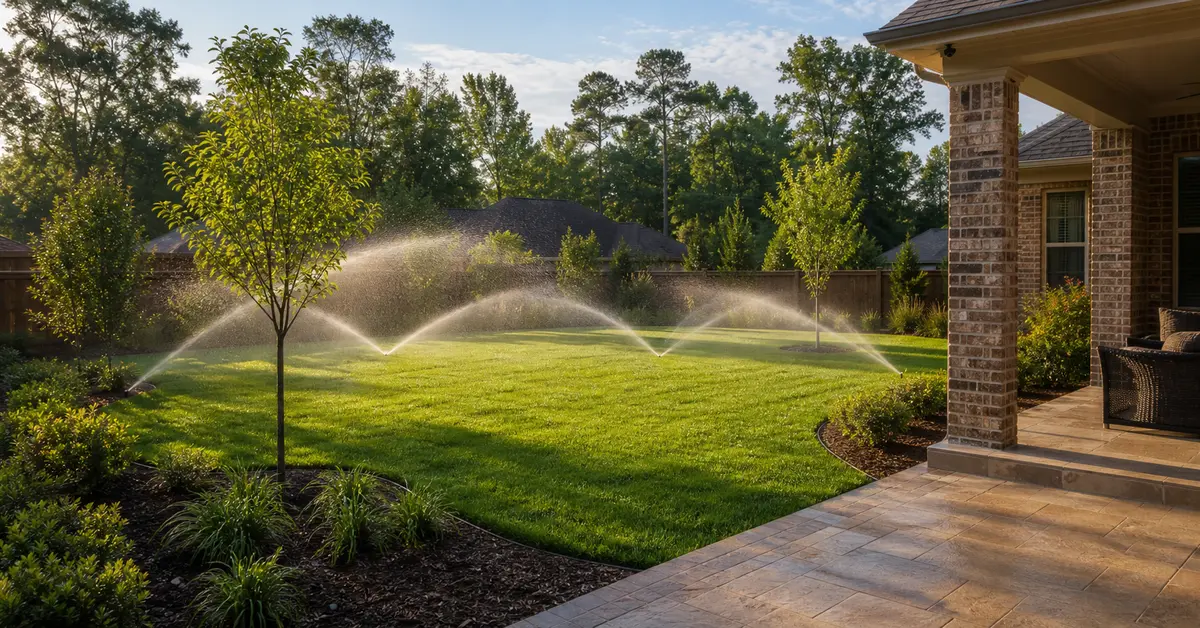
Late July is the hardest test an irrigation system faces here. Heat indexes push past 100, the ground bakes hard between storms, and then a thunderstorm drops an inch of rain in an hour that mostly runs off instead of soaking in. A system that looked fine in April gets exposed in weeks like these. The good news: most of what we find is fixable, and the diagnosis itself follows a repeatable order.
Step one: we run the zones and just watch
Before anyone touches the controller, we run each zone for a few minutes in the early morning and watch it work. Not a glance: a full stand-and-watch pass per zone. Heads that do not rise fully, rotors that stall partway through their arc, spray landing on the driveway, mist drifting instead of streaming. Ten minutes of watching tells us more than any schedule printout, and it is something a homeowner can do too. If you try it, walk it in the morning: afternoon wind and evaporation will hide half of what is happening.
Step two: we read the turf, not the timer
Browning tells a story by its shape. A crisp wedge of dry grass usually points at one head that is clogged, tilted, or out of rotation. Broad even browning across a whole zone points at pressure or run-time problems. Green rings around heads with dry gaps between them mean coverage was designed too thin: the heads are watering themselves, not the lawn. Matching the browning pattern to the zone map is how we narrow a lawn-wide complaint down to two or three specific fixes.
Step three: heat stress or hardware?
In a normal week the two are easy to confuse, and in a heat wave they stack on top of each other. Warm-season lawns in our area can wilt by late afternoon even with sound irrigation: blades fold, color dulls, footprints linger. The difference is the morning after a watering night. Heat-stressed turf with good coverage bounces back by breakfast. Turf sitting over a coverage gap stays flat and gray-green. When we walk a property at 7 a.m. we are really asking one question: did last night's water reach this spot or not?
Step four: red clay changes the math
Our soil is the part most out-of-town watering advice ignores. The red clay across the Chattahoochee Valley absorbs water slowly, and once it is baked dry it sheds a fast soak almost like pavement. Long single run times send water down the sidewalk, not into the root zone. On clay we favor cycle-and-soak scheduling: shorter runs repeated with rest in between, so water has time to move down instead of sideways. If a yard also holds water in the wrong places after storms, that is a drainage conversation as much as an irrigation one, and we look at both together with drainage and grading.
Step five: the controller reality check
Only after the hardware and soil questions do we open the controller box. We check that the schedule matches what the yard actually needs zone by zone, that any rain sensor is connected and working rather than just installed, and that seasonal adjust was not left on an April setting. A controller that ignores a storm wastes water. One that skips watering because of a two-minute shower stresses the lawn. Either way, the fix is minutes of work once you know to look.
Repair or redesign: how we make the call
Most systems we diagnose need repairs: heads, nozzles, a valve, a rewritten schedule. We tell homeowners that plainly, because a system worth keeping should be kept. The redesign conversation starts when the layout itself is the problem: zones that mix sun and shade on one valve, coverage designed for a landscape that has since changed, or a system that has been patched so many times the patches are the system. That is a bigger decision, and it is one we scope on the property, not over the phone. Our irrigation services cover both ends: repairs and maintenance for systems that need a mechanic, design and installation for yards that need a fresh start.
What to do before August
If your lawn is browning right now with the sprinklers running, the next two weeks matter. August is typically our hottest, driest stretch, and a coverage gap that costs you color in July can cost you turf in August. Run the morning watch test, note where the browning patterns sit, and deal with the specific problem instead of adding minutes across the board. If you would rather have our crew read the system for you, call (706) 786-9664 or request an estimate: we diagnose it on site and give you a straight answer about whether it needs a repair or a rethink.
Sprinkler system diagnosis questions
Why is my lawn browning even though the sprinklers run every night?
The most common causes we find are coverage gaps rather than schedule problems: a clogged or tilted head, a stalled rotor, or zones designed too thin. Watch each zone run in the early morning and match the browning pattern to what you see before adding minutes to the timer.
How do I tell heat stress from an irrigation problem?
Check the lawn the morning after a watering night. Heat-stressed turf with good coverage recovers overnight, while grass sitting over a coverage gap stays flat and gray-green at breakfast. In Chattahoochee Valley summers both can happen at once, so read each area separately.
What is cycle-and-soak watering and why does it matter on red clay?
Red clay absorbs water slowly, so one long run sends much of the water into the street. Cycle-and-soak splits the same total run time into shorter cycles with rest between them, giving water time to soak down to the roots instead of running off the surface.
When is it time to redesign an irrigation system instead of repairing it?
Repair is the right call for most systems: heads, nozzles, valves, and schedules. Redesign enters the conversation when the layout itself fails the yard, such as zones mixing sun and shade, coverage built for a landscape that has changed, or a system where patches have become the system. We make that call on the property after a full zone-by-zone diagnosis.