
Treat design and installation as two connected line items. What you pay depends mostly on how much groundwork your yard needs (grading, drainage, clay soil), the size of the project, your plant and material choices, and site access. A reliable number only comes after someone walks the property and writes up the scope.
What does a landscape design budget actually cover?
A complete budget has more pieces than most people expect. Plants are the part everyone pictures, but they are often not the biggest share. A realistic list looks like this:
- Design and renderings: the plan itself, so you can see the layout before anyone digs.
- Site work: clearing, tree removal and stump grinding, grading, and drainage fixes.
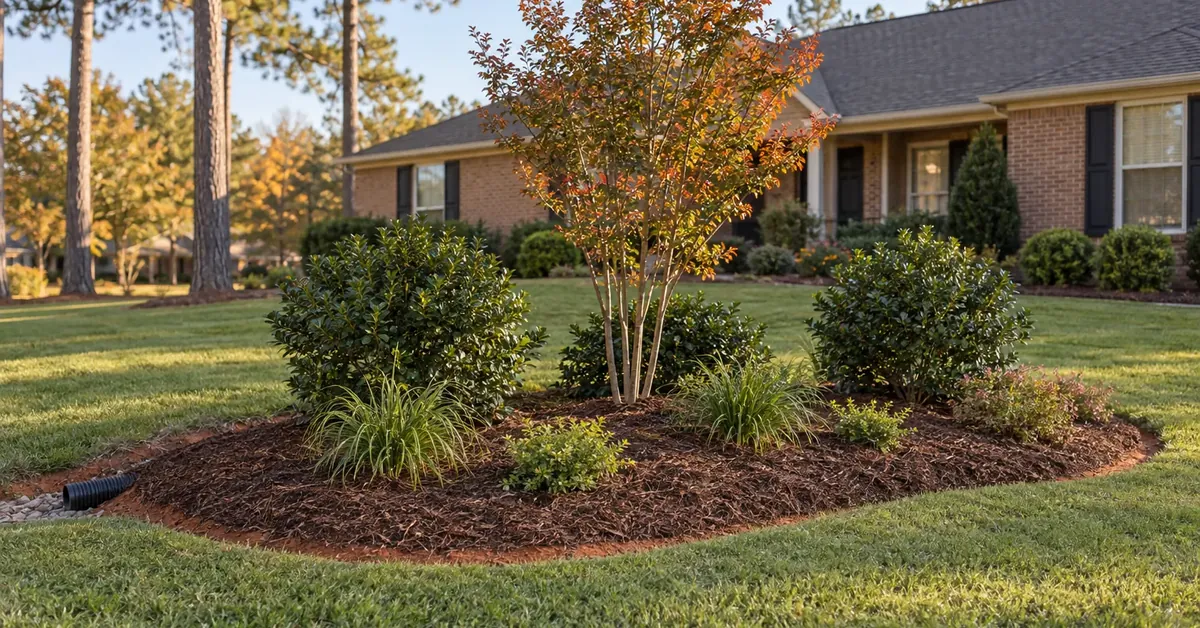
- Plants and trees: the material plus the labor to set them properly.
- Sod: including the soil prep underneath.
- Beds: edging, mulch or rock, and any weed barrier or soil amendments.
- Extras: lighting, water features, privacy plantings, and irrigation to keep it all alive.
Add a cushion on top. Once the ground is opened up, a buried root ball, an old footing or a soft spot can add work that nobody could see from the surface. Setting aside some contingency keeps a surprise from derailing the whole project.
Is it worth paying for a landscape designer, and who should build the plan?
For anything beyond swapping a few shrubs, usually yes. A plan costs far less than rebuilding a bed that was put in the wrong place. Common mistakes when homeowners skip planning include plants that outgrow their spot in three years, beds that collect water against the foundation, and a patio that ends up too small for the furniture meant to go on it.
A good design also gives you something to price. When every contractor bids from the same drawing, you are comparing the same project instead of three different ideas. Our landscape design and installation work starts with designs and renderings before any plants or materials are ordered.
It also helps to ask who builds the plan. When the people who plan the project are the same crew that installs it, less gets lost between the drawing and the yard. That is how we work, and it is worth asking any company you are considering whether design and build are handled by the same people.
What drives landscape design and installation cost in the Chattahoochee Valley?
Square footage matters, but these factors usually move the number more:
- Scope of groundwork. Clearing, grading and drainage are labor and equipment, and they come before anything pretty goes in.
- Plant size and type. A one-gallon shrub and a mature specimen tree are different purchases. Larger plants give an instant look but cost more and need more care to establish.
- Hardscape and material choices. Mulch beds and rock beds are very different budgets from patios, walkways or retaining walls. Hardscaping is its own line of work and is often priced separately from plantings.
- Access. A tight side gate, a steep backyard or a long haul from the driveway means more hand labor and less machine time.
- Extras. Landscape lighting, water features and irrigation are optional, but they are easier and cheaper to plan in from the start than to add after the beds are finished.
- Timing. Hot, humid summers are hard on new plantings. Fall is a strong planting window in the Southeast because roots can establish before the next summer, so planning often starts before then.
How do red-clay soil, slope and drainage change the budget?
This is where Chattahoochee Valley yards differ from the magazine photos. Red clay drains slowly, bakes hard in summer and turns slick when it is wet. Plants set in a clay hole without any prep can sit in standing water after a heavy rain, and then struggle through the next dry spell.
That is why we walk the property before anyone talks plant lists or pavers. We look at how the water moves, where the sun lands and how you actually use the space. Then we recommend the work that makes sense, and we tell you plainly when something you are considering is not worth the money.
In budget terms, here is what that can mean:
- If water pools in a low spot or runs toward the house, drainage and grading may need to happen first. Depending on the yard, that could be regrading, a French drain or both.
- On a slope, beds may need terracing or a retaining wall to hold soil and mulch. Check with your city or county about whether a permit is needed, since rules vary by location and wall height.
- Heavy clay often calls for soil amendments in the beds, which adds material and labor but helps plants survive.
Drainage is not exciting to spend money on, but it protects everything planted on top of it. If the yard has a water problem, put it at the front of the budget.
How do you compare landscape quotes side by side?
Two quotes that look different are often covering different work. Before you compare totals, line up these items:
- Scope. Does each quote list what is included, such as demolition, grading, soil prep, haul-off of debris and cleanup?
- Plant details. Look for plant names, sizes and quantities, not just "shrubs and trees."
- Materials. Mulch type and depth, edging, rock size, sod variety. Vague wording makes room for substitutions.
- Site conditions. Did the contractor actually walk the yard and look at drainage, slope and sun, or quote from a photo?
- What is left out. Lighting, irrigation or drainage may be missing from the lowest bid and show up later as add-ons.
- Payment and timeline. Look for a clear start window and a clear plan for how the job will be finished and walked through with you.
On hourly rates, a bare hourly figure tells you very little by itself. What matters is how many hours the job takes, how many people and what equipment are on it, and whether materials are included. A project price built from a written scope is usually easier to compare. If a contractor only gives you an hourly rate, ask for an estimate of total hours and what the job needs.
Can you phase a landscape project to spread out the cost?
Yes, and for many yards it is a smart approach, as long as the design covers the whole property from day one. Phasing works when each phase leaves the yard looking and working properly, and later phases do not undo earlier ones.
A common order looks like this:
- Phase one: clearing, grading, drainage and any hardscape that changes the shape of the yard.
- Phase two: trees, shrubs and bed installation, ideally timed for fall planting. Sod is timed separately, because the best window depends on the grass variety and the weather. Warm-season grasses generally establish best during active growth, often late spring into early summer, so ask your installer what fits your lawn.
- Phase three: lighting, water features and finishing touches.
If you plan to add a patio or irrigation later, tell the designer up front. Lines and base material are far easier to place before the plants are in.
If you are weighing a project and want a clearer picture of scope, our crew can walk the property with you and talk through what it needs. You can Request An Estimate through our contact page, or use this list to sharpen the quotes you are already collecting.
Frequently Asked Questions
Should I budget for design separately from installation?
Yes, list them as two line items even if one company handles both. Design is what lets you compare bids fairly and catch problems on paper, and it keeps the install scope clear. Some companies fold design into the project price, so ask how it is handled.
Is a landscape designer different from a landscape architect?
They can overlap, but the titles are not the same. Landscape architect is a licensed profession in most states, and it is often used for large or technical sites. Designers and design-build companies commonly handle residential plans, so check what your project needs and what your local rules require.
Does an hourly rate or a project price give a clearer comparison?
A project price built from a written scope is usually clearer, because it shows what you get for the total. An hourly rate only helps if you also know the hours, crew size, equipment and whether materials are included. Ask for both when you can.
Is fall a good time to plan a landscape project in Alabama?
Fall is a strong planting window for trees, shrubs and many perennials in the Southeast. Soil is still warm, air is cooler and roots can establish before next summer's heat. Design and planning usually begin before planting, so it helps to start the conversation ahead of fall.
What should a landscape design rendering show?
It should show the layout of beds, plants, hardscape and any lighting or drainage features, with enough scale that you can judge sizes. Plant names and placement help you and any contractor price the same project. It should also reflect how you plan to use the space.