
A fire pit can be the reason everyone heads outside, but it cannot fix a patio that feels cramped. If chairs block the route to the house, the fire feature crowds the table, or guests end up standing at the edge of the yard, the problem is usually the plan around the fire, not the lack of another feature.
For homeowners in Phenix City and Columbus, a fire pit project is a chance to make the whole gathering area work better. Before picking stone or choosing a shape, think through where people will sit, how they will move, what must stay clear, and how the space should feel on an ordinary evening. Those answers guide a better fire pit or outdoor fireplace plan than starting with a catalog photo.
The fire pit can be right and the patio can still be wrong
The fire feature draws attention to the space around it. If there is no comfortable place to sit, guests stand; if the route from the back door crosses the chairs, people cut through the conversation. A patio sized around the fire alone can leave too little room for the gathering.
Name the problem you want to solve: too few seats, no defined place to meet, or a path that runs through the conversation. A quick sketch of the house, patio edge, route, and gathering area helps keep the project focused on how the yard should work, not just on a feature picked from a catalog.
Start with people and the path
Picture an ordinary evening at home. How many people gather? Do you want fixed seats, movable chairs, or both? Should the patio work when the fire is off? Those answers shape the layout.
Sketch the route from the back door to the yard, then test the outline with chairs or boxes. Walk through as if carrying something. This is not a construction measurement; it is a quick check for bottlenecks before design work begins. Bring a photo of the test arrangement to the site discussion.
Draw the fire zone before the stone
The open area around the fire feature is part of the design, not leftover space. U.S. Fire Administration guidance says outdoor fireplaces and fire pits should be used at least 10 feet from the home or anything that can burn. This is general safety guidance, not a substitute for the selected system's instructions or local requirements. Ask the installer to account for siding, eaves, branches, and furniture before choosing a location.
If the clear zone competes with seating or the walkway, sketch alternatives before choosing materials. Move the feature, shift the seating arc, widen the patio toward an open side, or connect the gathering area to a separate path. The best option depends on the property and the selected feature, so confirm the plan on site.
Decide how people will sit
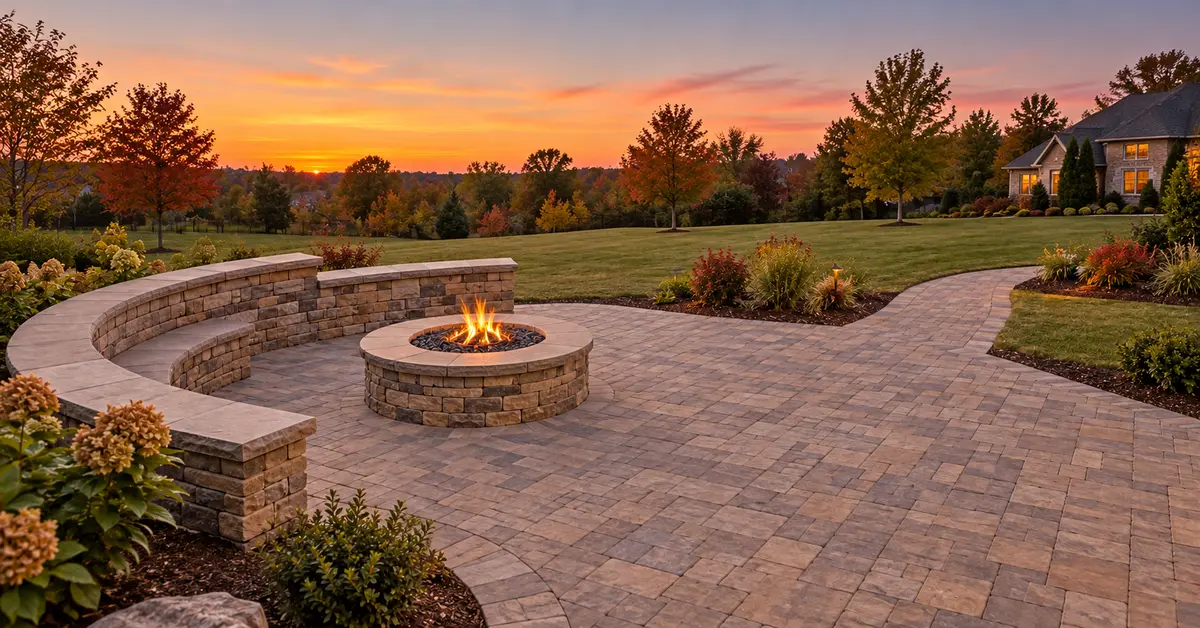
Seating is a main design decision, not an accessory to add later. Movable chairs are flexible but can drift into paths; a built-in wall gives the patio fixed seats and a clear edge. A mix can keep the space adaptable while reserving a few dependable places to sit.
A patio seating wall can frame one side of the gathering zone and leave another side open for the route in and out. Draw the wall, fire feature, and walking path together. Consider which view people will face, too. Greenz also offers landscape design and installation when planting or broader yard layout is part of the plan.
September is a planning month, not a weather forecast
For a local reference, NOAA's 1991–2020 Columbus Metro Airport normals list September's normal high and low as 87.3°F and 67.9°F, then October's as 78.3°F and 56.8°F. Those are climate normals, not a forecast. They are a reminder to make the patio comfortable on warm evenings as well as later cooler ones.
Decide whether the space should also work for a meal or a quiet daytime break. Shade and an open route can matter even when the fire is off. Evening lighting is a separate layer; Greenz's guide to landscape lighting decisions can help if path visibility is also on your list.
Make existing conditions part of the estimate
A site review matters for a new patio and an update to an existing one. The house, doors, slopes, trees, utilities, and current paths can all affect where the feature and seats fit.
Do not assume a fire feature can go anywhere on existing pavers. The surface, clearances, and remaining room for people need to be checked. Greenz's paver patio installation guide covers base and drainage for new work, but an existing patio needs its own review. Bring yard photos, a rough path sketch, and a note about what feels awkward to a discussion about the Phenix City service area or Columbus, Georgia service area.
A quick sketch to bring to the site visit
Before requesting an estimate, write down a few answers:
- How many people should have a comfortable seat at once?
- What path should stay open between the house and the yard?
- Which areas or objects need to remain outside the fire feature's clear zone?
- Should the space still be useful when there is no fire?
- Is this a new patio, or should a new feature connect to existing hardscape?
The sketch does not need to be measured like a plan set. It is a way to make priorities visible. Confirm the layout, clearances, surface, and construction details on site before work begins.
Frequently Asked Questions
How much space should I leave around a fire pit?
U.S. Fire Administration guidance says outdoor fire pits should be at least 10 feet from the home or anything that can burn. Treat that as general safety guidance, then confirm the selected feature's instructions and any local requirements with the installer. Trees, eaves, furniture, and the way people move through the patio should be included in the site plan.
Can a fire pit be added to an existing paver patio?
Possibly, but it depends on the existing surface, the selected fire feature, its clearances, and the room left for people to sit and walk. A site review is needed before calling an existing patio suitable. Greenz's paver patio guide explains base and drainage questions for new work; it does not replace an inspection of an existing patio.
Is a seating wall better than chairs around a fire pit?
A seating wall gives a patio fixed seats and a defined edge, while chairs can be moved or stored. Some plans use both. The better choice depends on how many people gather, how much of the walking route must stay open, and whether the space should feel flexible when the fire is not in use.
When should I plan a fire pit patio in Phenix City or Columbus?
September is a practical time to sketch the layout and request an on-site discussion before fall and winter use. It is not a promise about construction timing; the schedule depends on the project and current availability. Start with the space problem, then work through the route, seating, clearances, and feature together.
Make room for the gathering, not just the fire
A well-planned fire pit patio gives people room to arrive, sit, and move without letting the feature take over the yard. Greenz offers fire pits and outdoor fireplaces, patios, and seating walls as part of its hardscaping work. To discuss a gathering area in Phenix City or Columbus, Request An Estimate. Start with the problem and a few yard photos; the material choices can come later.