
Landscape lighting design is not about making every corner bright. It is about deciding where people move, what they need to see, which parts of the landscape deserve attention, and where darkness should remain. The best finished systems feel calm and useful because each light has a clear job.
September is a practical month to plan lighting around Phenix City and the Chattahoochee Valley. Evenings arrive earlier, summer foliage still shows the full shape of trees and shrubs, and outdoor routines are easy to observe after sunset. Greenz Outdoor Services offers landscape lighting as part of connected design and installation projects.
Start with a night walk, not a fixture catalog
Walk the property after dark using the routes the household actually follows. Begin at the driveway, move toward the main entry, pass through side gates, and continue to the patio or backyard. Notice changes in grade, steps, narrow turns, low branches, and places where the route visually disappears.
Then stop at the spaces where people spend time. Look back toward the house. A lighting plan should work from both directions. The view from the street, the approach to the door, and the view from a patio chair may need different layers.
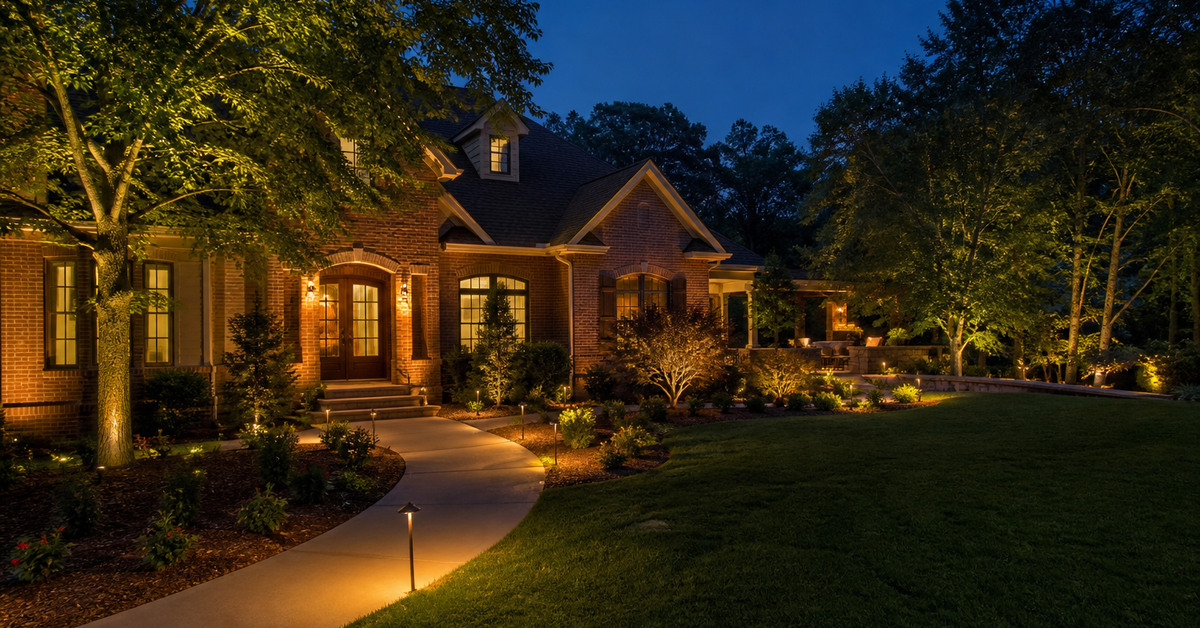
Seven decisions behind a balanced landscape lighting design
1. Which routes need guidance?
Paths, steps, transitions, and entrances deserve attention before decorative features. The goal is not to outline every edge with identical fixtures. It is to provide enough visual information for the route to make sense while preserving a comfortable nighttime atmosphere.
Mark the places where grade changes or direction shifts. A curved walk may need a few carefully located points of light, while a short straight walk may be served by light from the entry and nearby plantings. If the route is part of a future patio or walkway project, coordinate lighting sleeves and fixture locations before the base is installed.
2. What should become the focal point?
A mature tree, stone wall, textured facade, water feature, or layered planting can anchor the nighttime view. Choose one or two focal points for each major viewing area. Lighting every tree equally creates visual noise and can make the property feel flat.
Consider how the feature changes by season. A deciduous tree has a dense canopy in September and a visible branching structure in winter. A useful design should remain attractive in both states rather than depending on leaves to hide glare.
3. Which areas should stay dark?
Darkness creates contrast. It gives the eye a place to rest, protects views beyond the property, and helps illuminated features feel intentional. Natural edges, unused corners, and distant background areas often do not need direct light.
This is also a neighborly design decision. Aim and intensity should keep light on the intended property features rather than into windows, across the street, or toward the sky. More fixtures do not automatically make a more useful system.
4. How will the landscape grow around the light?
Fixtures placed for today's plant size can disappear inside shrubs or create harsh shadows as growth fills in. Plan around mature width, expected pruning, seasonal foliage, and normal access for bed maintenance. The light should support the planting instead of forcing the planting to fit a permanent beam.
That is one reason to connect lighting with landscape design and installation. Plant placement, irrigation, bed edges, and lighting routes can be considered together rather than added in separate passes.
5. What color and intensity fit the setting?
Warm light often feels comfortable around brick, stone, wood, and green foliage. Cooler or excessively bright light can make a residential landscape feel commercial. Consistency matters, but one intensity does not fit a path, a tall tree, and a quiet seating wall.
Evaluate the scene from normal eye level. A feature may look balanced from the driveway but overly bright from the patio. The design should control glare so people notice the landscape, not a row of exposed light sources.
6. Where will wiring and controls go?
Low-voltage landscape lighting still needs a planned route, suitable components, and accessible controls. Identify existing utilities, irrigation, drainage, roots, hardscape, gates, and future construction before deciding the route. Use the applicable utility-location process before digging.
If a future driveway, wall, or patio is likely, install planning provisions where appropriate rather than cutting through finished work later. Greenz can coordinate lighting with broader hardscaping services so the visible result and hidden preparation support each other.
7. How will the system be adjusted over time?
Plants grow, mulch levels change, fixtures shift, and outdoor routines evolve. A system should remain accessible for cleaning, aiming, and inspection. Build a simple fixture map and note which light serves each route or focal point.
After installation, review the property in different seasons and after landscape changes. Small adjustments can restore the intended scene without adding more lights. A practical plan anticipates maintenance instead of treating installation day as the final decision.
Lighting by outdoor zone
Different areas need different priorities. The front entry should feel clear and welcoming without overpowering the architecture. A side path benefits from guidance at turns and transitions. A patio needs comfortable ambient light and task support without glare in seated views. Trees and beds add depth when selected features are lit instead of every plant.
A fire feature already creates light and movement. Nearby landscape lighting should support circulation and edges rather than compete with the flame. For homeowners considering fire pits and fireplaces, plan the nighttime scene, seating, fuel or utility needs, and access as one outdoor room.
Common design mistakes
- Using the same fixture spacing along every path.
- Aiming bright light directly into common viewing positions.
- Lighting every tree and eliminating useful contrast.
- Ignoring mature plant size and seasonal growth.
- Running wire without considering irrigation, drainage, roots, or future hardscape.
- Hiding controls where they cannot be inspected or adjusted.
- Choosing fixtures before defining the job each light needs to do.
What to bring to a lighting consultation
- A short list of the routes used after dark.
- Photos from the main viewing points at dusk and full darkness.
- Notes about steps, grade changes, gates, pets, and delivery routes.
- Features you want to emphasize and areas you prefer to keep dark.
- Known irrigation, drainage, utility, and future construction plans.
- Examples of lighting you like, with a note about what feels right.
The Greenz approach keeps planning and construction connected through one dependable local team. That matters when lighting touches landscape beds, hardscape, irrigation, and the way the whole property is used.
Frequently Asked Questions
How many landscape lights does a yard need?
There is no useful universal number. The property needs enough light to support routes, entries, outdoor rooms, and selected focal points without flattening the scene or creating glare. A night walk defines those jobs first.
Should path lights be evenly spaced?
Not always. Uniform spacing can make a residential path resemble a runway. Placement should respond to turns, steps, planting, existing architectural light, and the views from both directions.
Can landscape lighting be added after a patio?
It can, but planning before hardscape installation may make wiring routes and fixture locations easier to coordinate. Existing conditions need an on-site review before deciding the approach.
Does landscape lighting need maintenance?
Yes. Plants grow, fixtures can shift, lenses collect debris, and aiming may need adjustment. Periodic inspection helps the system continue serving its intended routes and features.
Design the darkness as carefully as the light
A finished landscape lighting system should guide movement, reveal a few meaningful features, and let the rest of the property settle naturally into the evening. Walk the site, assign every light a job, and coordinate the hidden route with the landscape around it. To begin, request an estimate from Greenz Outdoor Services.