
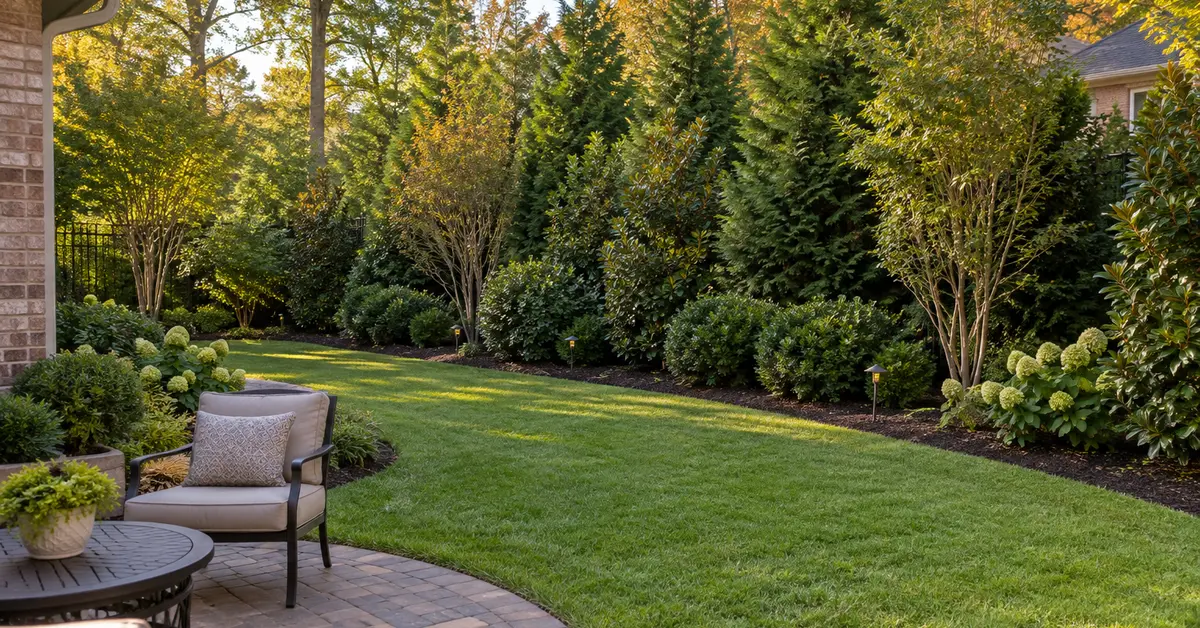
A natural privacy fence in Phenix City works best when it is designed as a planted screen, not a straight row of identical shrubs placed as close together as possible. The plan should start with the view you want to block, the space available at mature size, sunlight, drainage, utilities, and the amount of upkeep you are willing to accept. September is a practical time to make those decisions because summer growth patterns are visible and there is still time to plan a fall installation without rushing plant selection.
Key takeaways
- Measure the exact sightline before deciding how tall the screen needs to be.
- Choose plants by mature width, light, soil moisture, and maintenance needs.
- Use layered or staggered planting when space allows, rather than crowding one rigid row.
- Plan drainage, patios, lighting, and future access before plants close in.
Start with the view, not the plant list
Privacy is a specific design problem. A homeowner may want to soften a neighbor's second-story window, screen a pool equipment pad, separate a patio from the street, or create a quieter edge along a property line. Those targets have different heights, widths, and viewing angles.
Stand where people actually spend time: at the patio table, beside the fire pit, inside the kitchen, or near the pool. Mark the objectionable view and note whether it changes when you sit down. A screen that looks tall enough from the property line may still leave a direct view from an elevated window or sloped yard.
Greenz includes natural privacy fences within its landscape design and installation work. That approach lets the screen respond to the outdoor space instead of becoming an isolated hedge that competes with everything around it.
Measure the planting zone at mature size
Nursery plants can make a narrow bed look generous. Mature plants tell a different story. Before choosing a species, measure the usable depth from the property line to patios, walks, fences, utilities, drainage routes, and lawn areas that still need to be maintained. Then compare that space with the plant's expected mature width, not the width of the container.
Crowding creates several problems. Plants grow into walks, trap moisture against structures, shade each other, and require constant shearing to stay inside a space that was too small from the start. A privacy screen should fill in, but it also needs enough room for air movement and routine access.
If the planting zone is shallow, a narrower upright plant may fit better than a broad shrub that will be forced into a flat wall. If the yard has more depth, a staggered arrangement can provide better coverage and a more natural edge. The landscape design and installation page shows how planting decisions can be coordinated with the rest of the site.
Account for Phenix City soil and drainage
Soil conditions can change across one property, especially where construction, grading, or imported fill has altered the original profile. Alabama Cooperative Extension's overview of the state's soil areas explains that many upland soils have clayey subsoils, while other areas differ in texture and drainage. A red surface does not tell you everything about how quickly a planting hole will drain.
Check the proposed bed after a hard rain. Does water move through, sit against the property line, or collect where downspouts discharge? Dense soil can stay wet after the surface looks dry. On the other hand, a raised or amended bed may drain faster than the surrounding lawn. Plant selection and bed preparation should match the actual condition.
Do not solve a drainage problem by digging a deeper hole and filling it with loose soil. That can create a basin where water collects around roots. If the site holds water, the plan may need grading, a different bed profile, or a separate drainage solution. Greenz's guide to paver patio base and drainage planning makes the same larger point: finished surfaces and water movement have to be designed together.
Choose a screen structure that can age well
A single evergreen row
A single row can work where space is limited and a consistent formal edge suits the property. Its weakness is dependence on every plant. If one fails, the gap is obvious. Repeated shearing can also leave a dense outer shell and sparse interior growth. The maintenance plan should match the selected plant's natural habit.
A staggered screen
Two offset rows create overlapping coverage without placing plants shoulder to shoulder. This approach needs more bed depth, but it can hide a gap if one plant struggles. It also allows plants with different shapes to share the work.
A layered landscape edge
A layered screen uses taller structural plants behind medium shrubs and lower planting near the viewing side. It takes the most room, yet it often feels more like a finished garden than a green wall. Seasonal color or ornamental texture can be added without asking every plant to provide year-round screening.
The best structure depends on the property's architecture and how the yard is used. A family patio may benefit from a softer layered edge. A narrow side yard may call for a simpler upright row and careful access planning. Greenz serves local homeowners from Phenix City through the wider Chattahoochee Valley, and the Phenix City service area page outlines the company's local design-build scope.
Decide what “low maintenance” means to you
No living screen is maintenance free. The useful question is what kind of care fits the homeowner. Some plants need regular shaping to stay narrow. Others need less clipping but occupy more space. Fast growth can close a view sooner, but it can also mean more pruning later.
Discuss these decisions before installation:
- Is occasional selective pruning acceptable, or is a tightly clipped hedge expected?
- Will fallen leaves, berries, or seed be a concern near a pool or patio?
- Can irrigation reach the root zone without spraying the house or fence?
- Will the screen shade lawn or planting beds as it grows?
- How will crews reach the back of the bed for pruning and cleanup?
A practical plan also considers what happens if one plant dies. Mixing compatible species or using overlapping groups can make replacement less disruptive than rebuilding a matched row years later.
Coordinate the screen with outdoor living features
A privacy planting can improve a patio, walkway, or fire feature, but roots and branches need room. Locate the mature plant edge before finalizing hardscape dimensions. Keep access to cleanouts, gates, utility equipment, and drainage inlets. Avoid placing a screen where it will push people into a narrow circulation path.
When a screen belongs beside a planned patio, coordinate it with the company's hardscaping services. A shared plan can set the bed line, hardscape edge, drainage path, and seating orientation together. It is easier to reserve planting soil and irrigation routes before a patio is built than to cut into a finished project later.
Landscape lighting also needs room. A fixture aimed at a young shrub may be swallowed by foliage after a few seasons. Conduit or cable routes should not be placed where future root work is likely. The screen should make an evening space feel enclosed without creating dark corners along steps or gates.
A September planning checklist
- Photograph the unwanted views from seated and standing positions.
- Measure bed depth, screen length, and the required height.
- Mark property lines, utilities, downspouts, drains, gates, and service access.
- Observe sun and soil moisture in several places along the proposed bed.
- Choose a row, staggered, or layered structure.
- Review mature plant size and realistic pruning needs.
- Coordinate any patio, walkway, irrigation, or lighting work before installation.
Greenz is a locally owned design-build contractor, so the same crew can carry the plan from consultation through completion without splitting the work among unrelated providers. Read more about the Greenz approach, then use the estimate request form or call (706) 786-9664 to discuss a natural privacy fence for your Phenix City property.
Frequently Asked Questions
How long does a natural privacy fence take to fill in?
It depends on plant species, starting size, spacing, sunlight, soil, water, and care. A responsible plan uses mature dimensions and realistic growth expectations instead of promising a fixed completion date.
How close should privacy plants be to a property line?
Spacing should account for mature width, pruning access, local rules, utilities, and any existing fence. Centering a broad plant too close to the line can create a maintenance problem on the neighboring side.
Can a planted screen help with noise?
Dense planting can soften the feel of a boundary and reduce direct views, but ordinary residential plantings should not be sold as soundproofing. Their strongest benefit is visual separation and a more comfortable outdoor setting.
Should a privacy screen use one plant species?
Not necessarily. One species creates a uniform hedge, while compatible mixed groups can provide overlapping coverage and reduce the visual effect of a single plant loss. The right choice depends on space and design style.